Gov.gr
Designing the central digital gateway for Greek citizens to access over 1,700 government services, fast, intuitive, and inclusive.
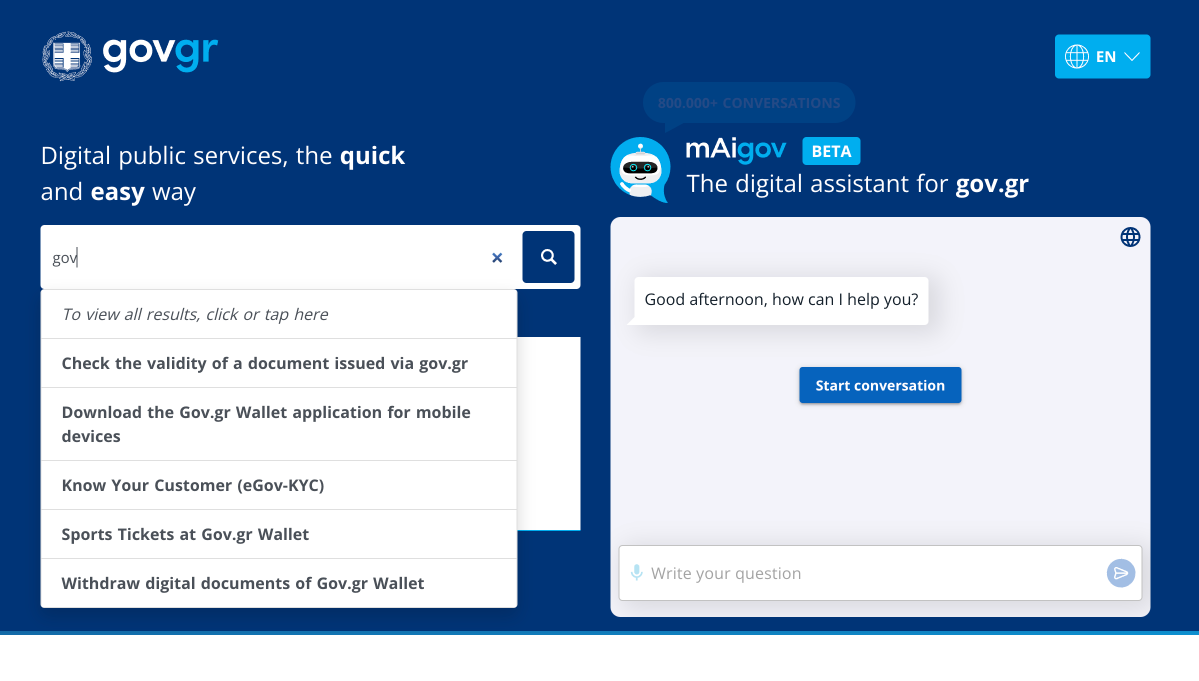
Gov.gr is the Hellenic Republic's unified digital portal, a single destination where every citizen, business, and institution can access the full spectrum of public services online.
The design challenge was immense: create a system that organizes thousands of bureaucratic processes into something anyone can navigate, regardless of their digital literacy. Every design decision prioritized clarity over complexity, ensuring that a retiree renewing their ID card has the same seamless experience as a startup filing tax documents.
The Fragmented State
Before gov.gr, Greek citizens faced a labyrinth of disconnected government websites. Each ministry operated its own platform with different navigation patterns, visual styles, and authentication systems. Finding how to renew a passport required knowing which ministry handled it, then navigating an outdated website built a decade ago.
The mandate was clear: unify everything under one roof. Create a single, modern portal where any citizen can find any service in seconds, not minutes, not hours of searching across broken links and outdated PDFs.
The Homepage Experience
A clean, structured landing page that puts search first and organizes services into intuitive categories, ensuring citizens find what they need within seconds of arrival.
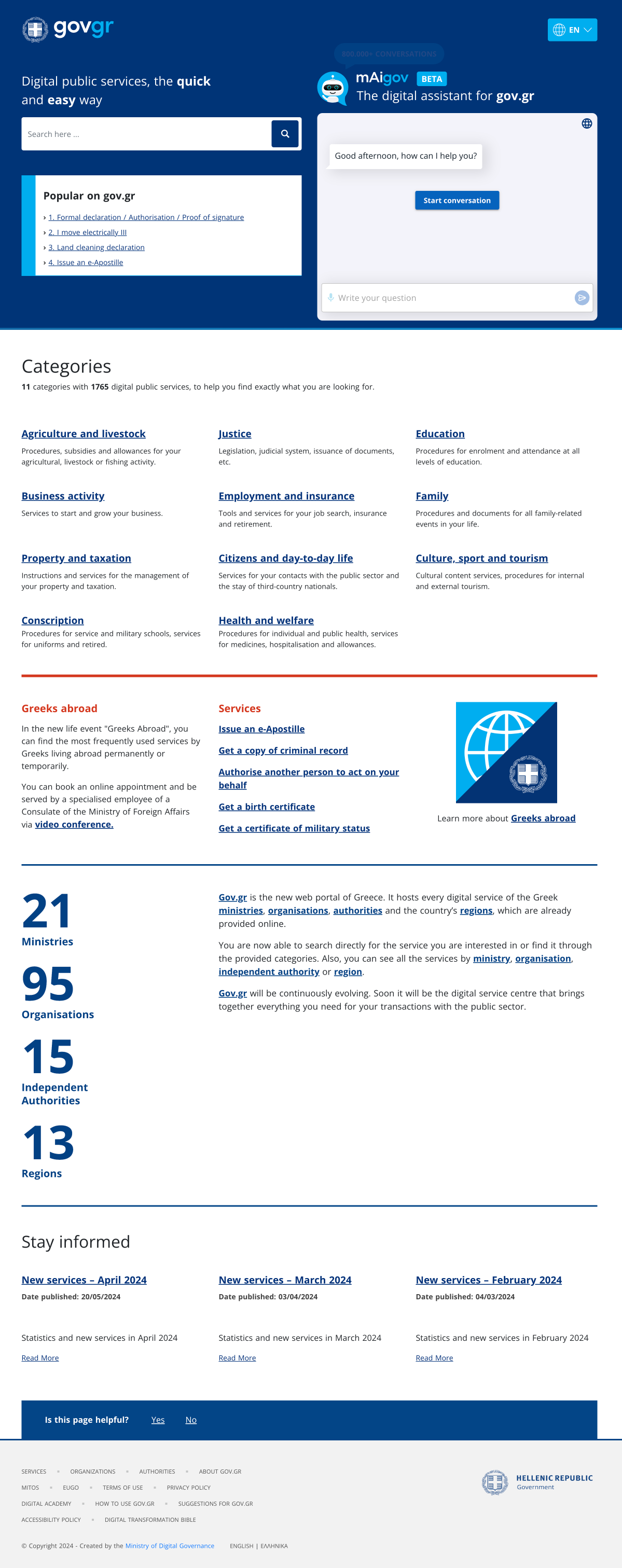
Search-first design
The prominent search bar with autocomplete suggestions ensures citizens can find services by typing natural language queries. Combined with the mAigov AI assistant, the portal offers multiple pathways to discover services, whether you know exactly what you need or you're exploring for the first time.
Organizing Complexity
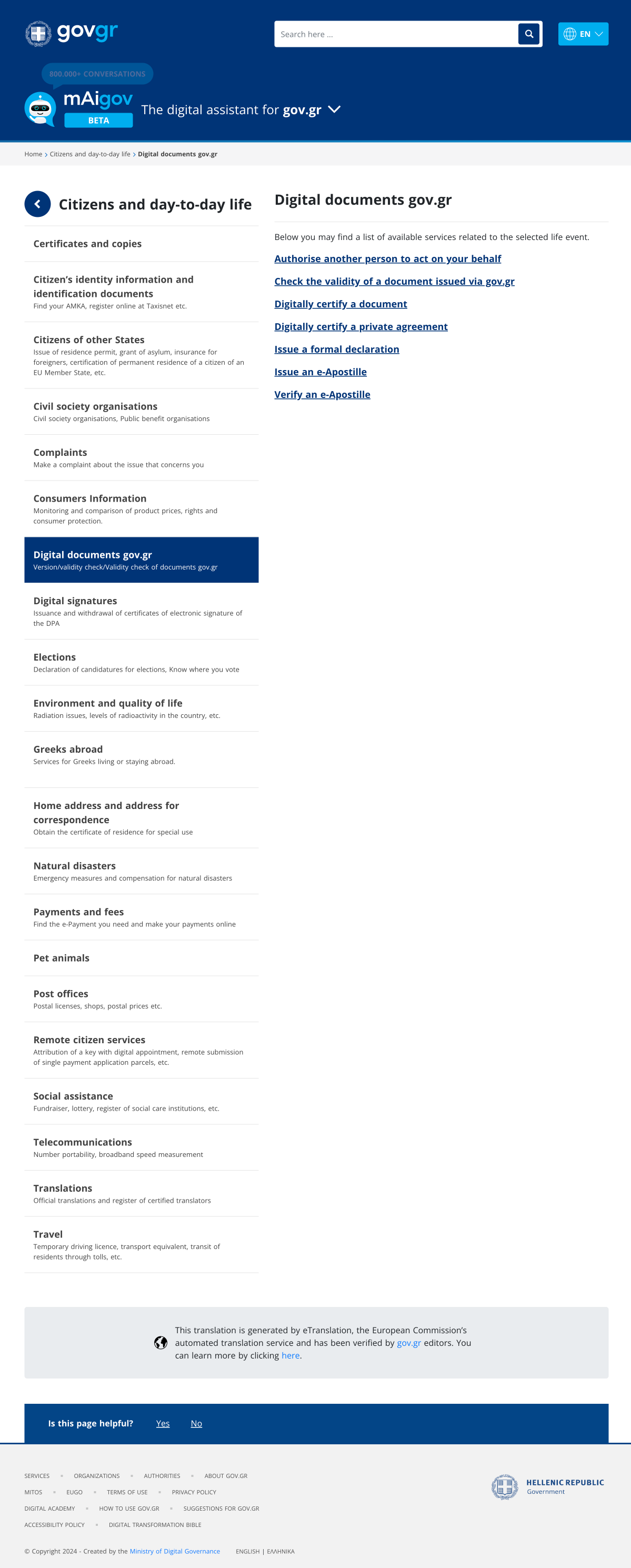
Category-driven navigation
Services are organized into broad life-event categories, "Citizens and day-to-day life", "Business activity", "Property and taxation", making it easy to browse by context rather than by ministry name.
- Sidebar navigation for deep category exploration
- Subcategory drill-down with clear breadcrumbs
- Service counts per category for at-a-glance orientation
- Cross-linked related services to aid discovery
Clear, Actionable Pages
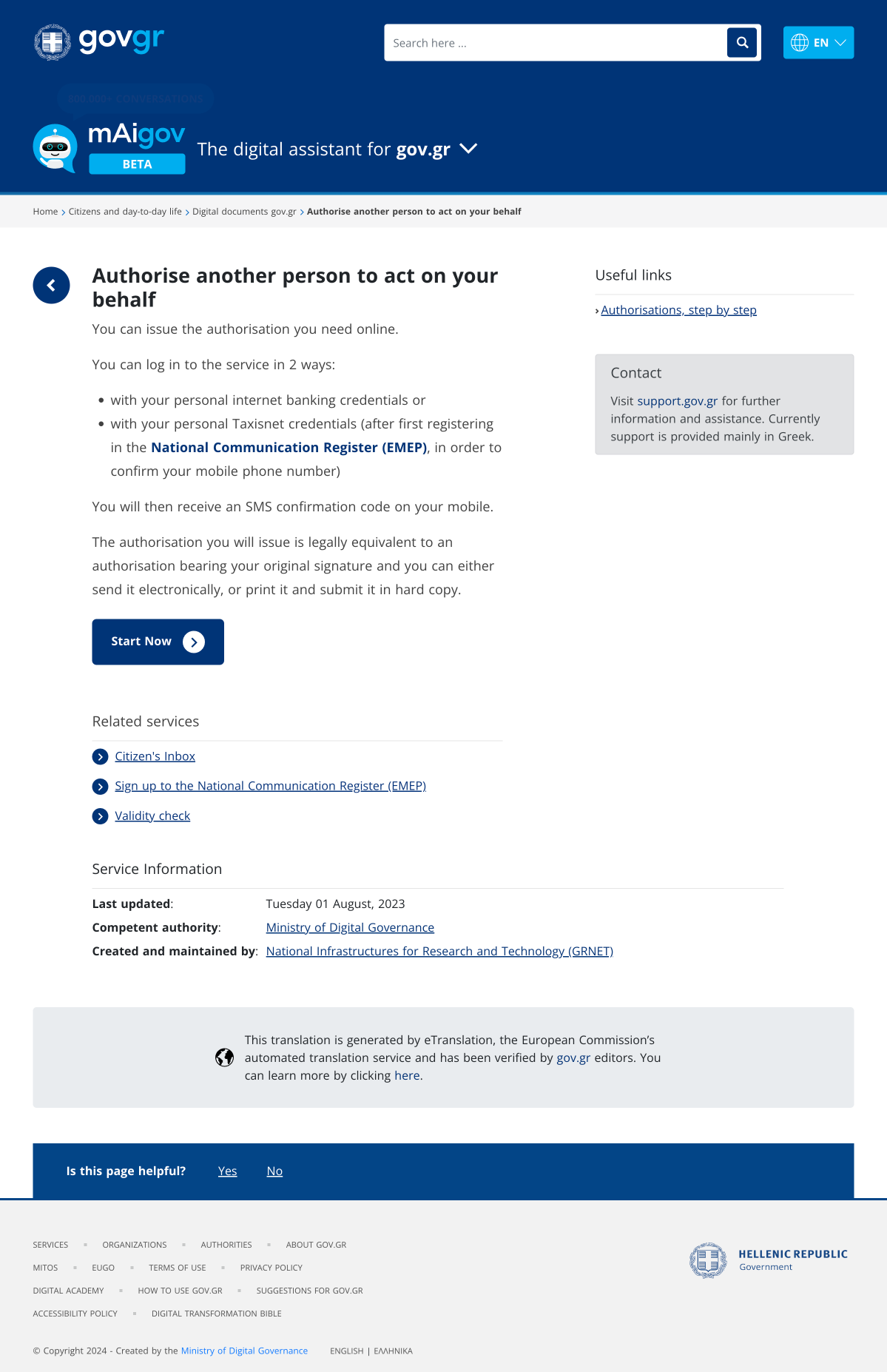
Every service tells its story
Individual service pages follow a consistent template: a clear title, step-by-step instructions, authentication options, and a prominent "Start Now" call to action. No ambiguity, no jargon.
- Breadcrumb navigation for orientation
- Related services for cross-discovery
- Service metadata (last updated, competent authority)
- Useful links and contact information
Finding What Matters
Faceted filtering for precision
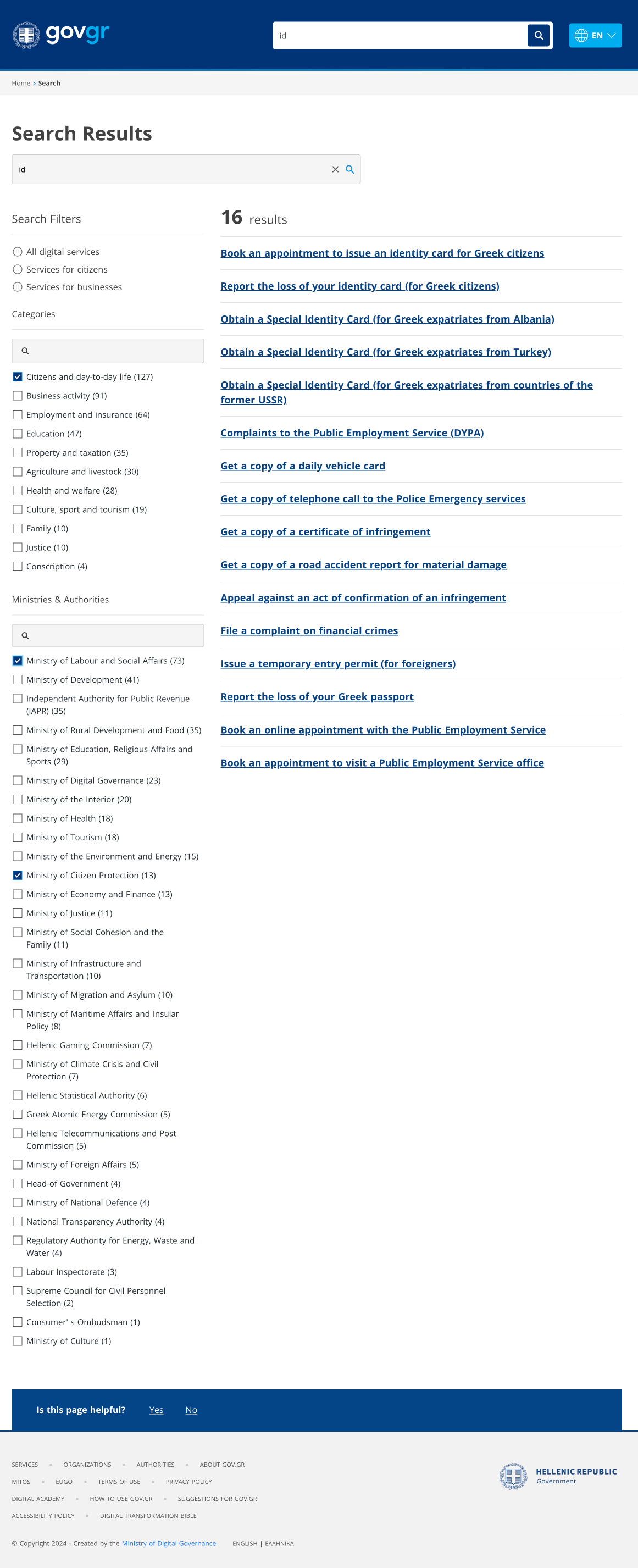
The search experience goes beyond basic keyword matching. Citizens can filter results by service type, category, and responsible ministry, turning broad queries into precise matches. The sidebar filter panel makes complex searches feel intuitive.
- Real-time search with instant results
- Filter by category, ministry, and service type
- Result count feedback for search refinement
- Ministry-level filtering across 20+ organizations
The Full Government Apparatus
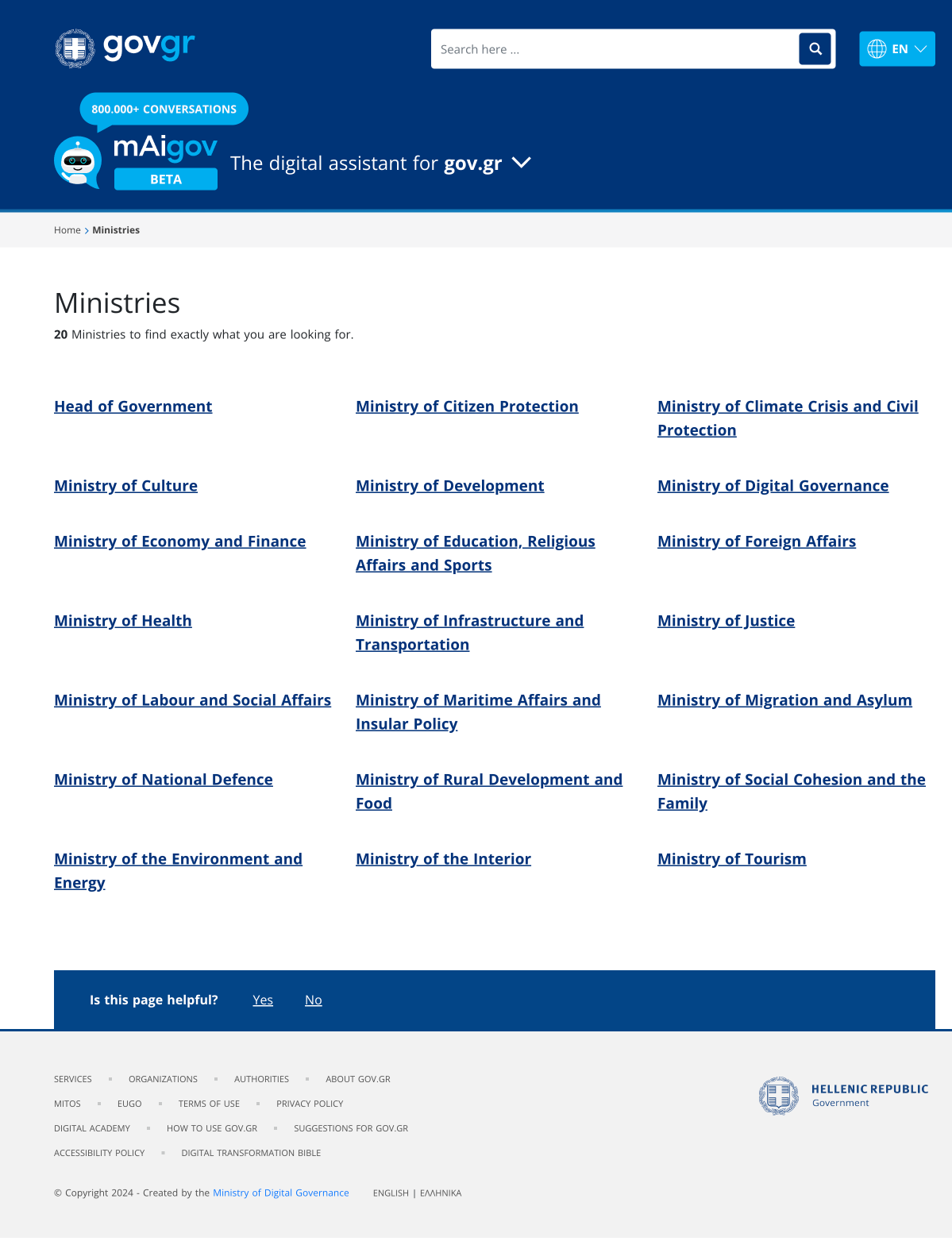
Every corner of the Greek government, from the Ministry of Health to the Ministry of Digital Governance, is represented through a clean, scannable directory that connects citizens to the right authority.
mAigov Digital Assistant
The portal integrates mAigov, an AI-powered chatbot that helps citizens navigate government services through natural conversation. With over 800,000 conversations handled, it serves as a virtual civil servant available around the clock.
Designed to appear as a friendly, approachable companion, the chatbot widget sits at the top of every page, ready to answer questions about procedures, documents, and service availability in both Greek and English.
Design Details
Color Palette
The official government blue anchors the visual identity, supported by lighter blues for interactive elements and a clean white background for maximum readability.
Typography
A clean, modern type system optimized for legibility across long-form government content and dense data tables.
Accessibility
As a public portal serving all citizens, accessibility was non-negotiable. The design meets WCAG standards across the board.
- WCAG 2.1 AA compliant
- Full keyboard navigation
- Bilingual (Greek & English)
- Responsive across all devices
- Screen reader optimized
Full Portal Overview
Reflection
Designing for government is designing for everyone. The diversity of the audience, from digital natives to elderly citizens visiting a website for the first time, demanded a level of clarity and simplicity that left no room for ambiguity.
The most meaningful outcome wasn't a polished interface; it was hearing that citizens could now complete in minutes what previously required hours of queuing at government offices. That's the real measure of design success: when the design disappears and people simply get things done.